Why family offices are looking at RAK
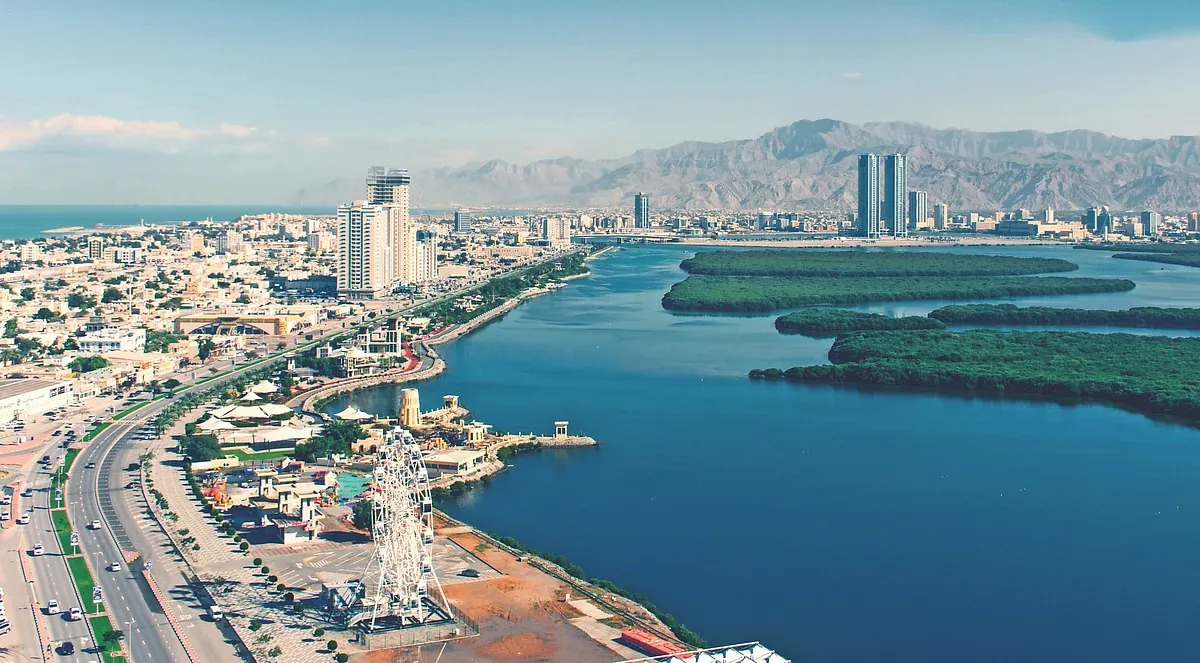
Family offices choosing a UAE base have historically defaulted to Dubai (DIFC) or Abu Dhabi (ADGM) without seriously pricing the alternative. RAK's pitch is straightforward: the same federal tax framework and 100% foreign ownership those hubs offer, delivered through RAKEZ or Innovation City at licence and office costs typically 20–30% below comparable Dubai free zones — with a growing, closed-door peer network already meeting locally through RAK Leaders Club.
It is not yet a scale play — Inside RAK tracks a small but growing base of verified family-office principals active in the emirate, not the hundreds registered in DIFC. What RAK offers instead is early positioning: lower operating cost, direct access to RAK Vision 2030's investment priorities, and proximity to a diversifying economy where no single sector exceeds 27% of GDP.
How a family office is structured here
Most family offices in RAK operate as a RAKEZ or Innovation City free-zone holding entity, licensed to hold and manage investments, real estate, and operating-company shares on behalf of the family. The entity does not need a physical trading operation — a holding/investment licence covers passive asset management, with the option to add specific activities (advisory, real estate management) as the mandate grows.
- Licence type: holding company / investment licence under RAKEZ's non-regulated activities list, or an Innovation City entity if the family's mandate includes AI, Web3, or digital-asset allocations.
- Ownership: 100% foreign-owned, no UAE national shareholder or local service agent required.
- Substance: a registered office and at least nominal local presence; family offices with genuine decision-making activity in-emirate strengthen their tax-residency position.
- Banking: UAE corporate banking is the practical bottleneck for most new entities — expect a compliance-heavy onboarding regardless of free zone, and budget time for it separately from licensing.
RAK ICC: the offshore alternative
Distinct from RAKEZ, RAK ICC (Ras Al Khaimah International Corporate Centre) is the emirate's offshore corporate registry — and it's the structure most family offices should actually be comparing against DIFC/ADGM, not RAKEZ. As of 2026, RAK ICC has processed 40,000+ incorporations across 160+ nationalities, putting it in the same scale bracket as BVI or the Cayman Islands, but domiciled in the UAE with access to DIFC and ADGM courts under a common-law framework.
RAK ICC offers two structures relevant to family offices:
- International Business Company (IBC): a pure offshore holding vehicle — no physical UAE office required, no minimum capital, incorporated in around 2 working days. Commonly used for investment SPVs, IP holding, and family wealth structures rather than operating businesses.
- RAK ICC Foundation: a standalone legal entity with no shareholders or share capital — it owns itself and is run by a Council (minimum 2 members: the founder, family members, and/or professional advisors) for the benefit of named beneficiaries under a charter. Built specifically for succession planning, asset protection, and family governance. Minimum initial capital is just US$100, and registration takes 3–10 business days through a licensed registered agent.
Indicative costs: government incorporation fees run around AED 3,250 with AED 3,950 annual renewal, though full-service setup packages (including a registered agent, which is mandatory) typically total AED 13,000–18,000 depending on provider. Only basic details — name, registration date, founder, council members, and registered agent — sit on the public register; everything else is private unless a relevant authority requires disclosure.
In practice, many family offices pair the two: a RAKEZ or Innovation City entity for any active management/advisory presence in-emirate, and a RAK ICC IBC or Foundation sitting above it (or alongside it) purely to hold the underlying investment and real-estate assets with succession and privacy protections built in.
Tax treatment
Qualifying free-zone income can benefit from the UAE's 0% corporate tax regime for Qualifying Free Zone Persons, provided the entity meets substance and qualifying-activity requirements — holding shares and securities for investment purposes is typically treated as a qualifying activity. This is a structuring question that depends on the family's specific asset mix and should be confirmed with a licensed UAE tax advisor before incorporation, not assumed from general guidance like this page.
Inside RAK does not provide tax, legal, or investment advice. The structuring notes above are directional only — verify current Qualifying Free Zone Person criteria and your specific tax position with a licensed UAE advisor before acting.
The network: RAK Leaders Club
RAK Leaders Club is the closest thing RAK has to a family-office peer network: an invitation-only circle built around an annual Leaders Forum and a members-only briefing, The RAK Leaders Letter. Inside RAK covers the club's public activity editorially; membership itself is handled directly by the club.