Mantle8 Launches Natural Hydrogen Exploration Programme in Ras Al Khaimah
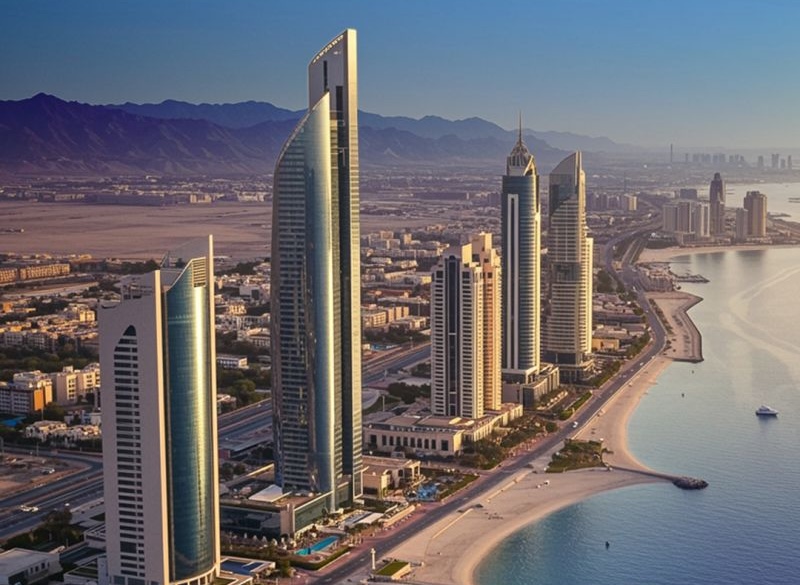
French geoscience company Mantle8 has commenced a natural hydrogen exploration programme in Ras Al Khaimah, marking the UAE's first dedicated effort to assess commercial viability of naturally occurring hydrogen. The project, backed by RAK's government, could position the emirate as a pioneer in low-carbon hydrogen production. What this means for the RAK economy and investors.
- Mantle8 begins first natural hydrogen exploration programme in the UAE
- Project focuses on RAK's geological formations known for serpentinisation processes
- Natural hydrogen could offer lower-cost, lower-carbon alternative to green hydrogen
- RAK government supports initiative as part of energy diversification strategy

- 2026 — Key year
- 1% — Notable rate
- 8 — Volume / scale
What is the Mantle8 natural hydrogen exploration programme?
French geoscience and exploration company Mantle8 announced on 30 October 2026 the launch of a dedicated natural hydrogen exploration programme in Ras Al Khaimah. The programme, the first of its kind in the UAE, targets geological formations in the Hajar Mountains and surrounding areas where serpentinisation — a water-rock reaction that generates hydrogen — is known to occur. Mantle8, a spin-off from the French geological survey BRGM, specialises in locating natural hydrogen accumulations using proprietary geophysical and geochemical survey techniques. The initial phase, funded through a combination of Mantle8 equity and a strategic grant from the RAK Government's Department of Energy and Natural Resources, covers a 2,000-square-kilometre licence area and includes airborne electromagnetic surveys, soil gas sampling, and shallow drilling campaigns scheduled through Q2 2027.
Who are the key partners and what are the technical objectives?
The programme is a collaboration between Mantle8, the RAK Department of Energy and Natural Resources, and the American University of Ras Al Khaimah's Department of Earth Sciences. Mantle8's CEO, Dr. Emmanuel Masini, stated that the company's "unique exploration methodology, combining satellite-based remote sensing with ground-truth geochemistry, has already identified multiple high-priority targets in the licence area." The technical objectives are threefold: confirm the presence of natural hydrogen seeps at commercially relevant concentrations (above 1% H2 by volume), characterise the reservoir geometry and seal integrity, and estimate the potential recoverable resource volume. The RAK government has committed to fast-tracking environmental permits and providing access to existing geological data from previous mineral exploration campaigns.
Why could natural hydrogen be a game-changer for RAK's energy economy?
Natural hydrogen, sometimes called "white hydrogen," is continuously generated by geological processes and can be extracted with a fraction of the energy input required for green hydrogen (electrolysis powered by renewables) or blue hydrogen (steam methane reforming with carbon capture). If commercial volumes are proven, RAK could become a low-cost producer of zero-carbon hydrogen, supplying local industries such as RAK Ceramics, steel plants, and the growing maritime bunkering sector at Jebel Ali and RAK Port. The emirate's Vision 2030 targets a 30% reduction in industrial carbon intensity by 2030; natural hydrogen could contribute directly to that goal. Moreover, successful exploration would attract downstream investment in hydrogen liquefaction, ammonia synthesis, and fuel cell manufacturing, creating a new industrial cluster. The programme also strengthens RAK's reputation as a jurisdiction willing to pilot frontier energy technologies under a clear regulatory framework.
Frequently asked
What is natural hydrogen and how does it differ from green hydrogen?
Natural hydrogen is continuously generated by geological processes like serpentinisation, requiring minimal energy to extract, unlike green hydrogen which is produced via electrolysis using renewable electricity.
What area does the exploration licence cover?
The licence area covers approximately 2,000 square kilometres in the Hajar Mountains region of Ras Al Khaimah.
When are drilling campaigns expected to begin?
Shallow drilling campaigns are scheduled through Q2 2027 as part of the initial exploration phase.
InsideRAK is an independent publisher and is not affiliated with any Ras Al Khaimah government body. This report was compiled from the sources above and verified against published records. Spot an error? corrections@insiderak.com